June 27 is National HIV Testing Day, and this year it falls right in the middle of PrideFest weekend in downtown St. Louis. That’s not a coincidence. Pride has always been about visibility, and there’s nothing more visible you can do for your own health than knowing your status.
The message behind National HIV Testing Day is simple: get tested. But for many people, the barriers aren’t due to a lack of motivation; more often, it’s a lack of information. What kind of test will I take? How long until I get results? What if I tested recently? What if I’ve had a possible exposure? How accurate is that at-home test I did?
This post answers all of it. By the end, you’ll know exactly what type of HIV test fits your situation, where to get one in St. Louis, and what to do with the result either way.
Why Testing Still Matters in 2026
Around 1.2 million people in the United States are living with HIV. Of those, roughly 13 percent don’t know it. That gap exists not because people don’t care, but because barriers—stigma, lack of access, confusion about testing options, fear of results—keep people from finding out.
The earlier HIV is detected, the better the outcomes. People who know their status can start treatment, protect their partners, and live full, healthy lives. People who don’t know remain at risk of unknowingly passing the virus to others. Testing is how that changes.
The CDC recommends that everyone between the ages of 13 and 64 get tested for HIV at least once as part of routine health care. If you’re sexually active with multiple partners, or if you’re a gay or bisexual man, or if you share injection equipment, the recommendation is at least once a year, and every three to six months if your risk is higher.
If you haven’t been tested recently, June 27 is as good a day as any to change that. Make an appointment, or walk-ins are always welcome at Health Stop STL.
The Three Types of HIV Tests
Not all HIV tests work the same way. The type you take affects how soon after an exposure you can detect the virus, how you receive results, and what happens next. Here’s a plain-language breakdown of each.
1. Antibody Tests
What they detect: Antibodies your immune system produces in response to HIV.
Window period: 23 to 90 days after exposure. Most people will develop detectable antibodies within 23 to 45 days, but it can take up to 90 days for some people.
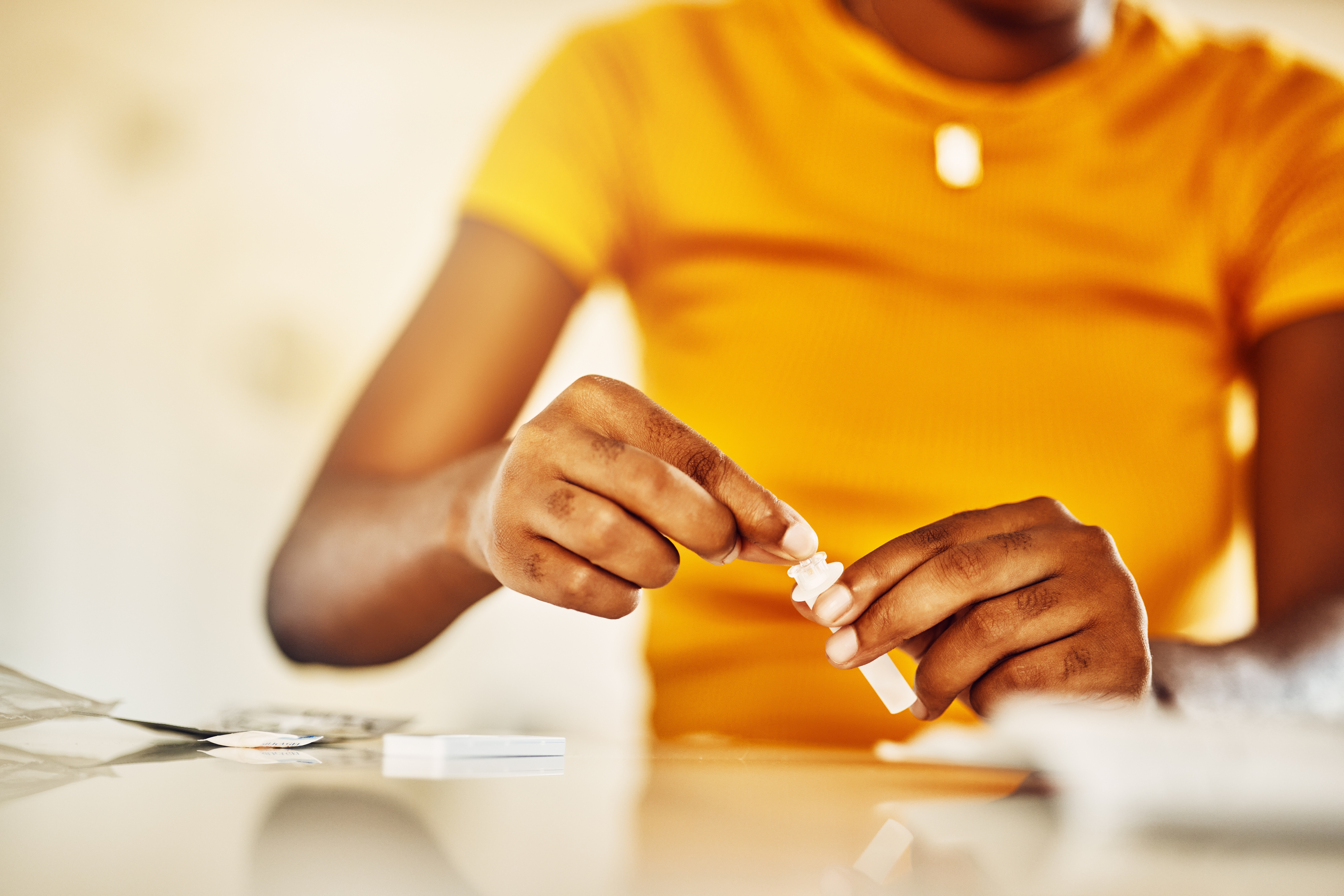
How it works: Antibody tests use either a fingerstick blood draw or an oral fluid swab. They’re the most common type of rapid test and the only kind approved for at-home self-testing. Results come back in 20 to 30 minutes at a clinic, or within 20 minutes with an at-home kit.
Best for: Routine screening after the window period of a recent exposure. Also, the most accessible option, since they don’t require a blood draw from a vein.
What to know: Because antibody tests look for your immune system’s response to HIV rather than the virus itself, they take longer to turn positive after a new infection. If you test too soon after an exposure, you could get a false negative. If there’s any chance you were exposed within the last 90 days, tell your provider so they can help you choose the right test.
2. Antigen/Antibody Tests
What they detect: Both HIV antibodies and a protein called p24, which is produced by the virus itself before your body has had time to build antibodies.
Window period: 18 to 45 days when done with blood drawn from a vein in a lab. 18 to 90 days when done as a rapid finger-stick test.
How it works: The lab version requires a blood draw and sends your sample off for processing, with results typically returning within a few days. A rapid version is also available using a finger stick, with results in about 30 minutes or less.
Best for: Anyone who wants earlier detection than an antibody-only test can offer, or anyone getting tested before starting PrEP. This is the standard test used at most clinics and is the type most often recommended by providers.
What to know: The lab-based antigen/antibody test is the most commonly recommended option for clinical settings because it detects HIV earlier than antibody-only tests. If you had a possible exposure in the last few weeks, this is likely the test your provider will suggest.
3. Nucleic Acid Tests (NAT)
What they detect: The actual HIV in your blood, not your immune response to it.
Window period: 10 to 33 days after exposure, making it the earliest-detecting option available.
How it works: A blood draw is sent to a lab. It’s not a quick turnaround test, and it costs significantly more than antibody or antigen/antibody tests. Results can take several days.
Best for: People who have had a recent high-risk exposure, have early symptoms that could indicate acute HIV infection, and have tested negative on an antibody or antigen/antibody test. Also used after a new HIV diagnosis to measure viral load, and to monitor how well treatment is working.
What to know: NAT is not used for routine screening. It’s a specialized test for specific situations. If you think you need one, talk to a provider about whether it’s the right call for your circumstances.
A Quick Reference: HIV Test Comparison
| Test Type | What It Detects | Window Period | Result Time | Best For |
| Antibody test | HIV antibodies | 23–90 days | 20–30 min (rapid) | Routine screening, at-home testing |
| Antigen/antibody test (lab) | Antibodies + p24 antigen | 18–45 days | Days | Clinical screening, pre-PrEP testing |
| Antigen/antibody test (rapid) | Antibodies + p24 antigen | 18–90 days | 30 min or less | Clinic-based rapid screening |
| NAT / RNA test | The virus itself | 10–33 days | Days | Recent exposure, early symptoms, and viral load monitoring |
What Is the Window Period and Why Does It Matter?
The window period is the time between when you were exposed to HIV and when a test can reliably detect it. Testing during the window period can produce a false negative result, meaning the test comes back negative even if you have HIV, simply because there isn’t enough virus or antibody present yet to show up.
This is one of the most important things to understand about HIV testing. A negative result only means what it says if you’re past the test’s window period. If you had a possible exposure recently, your provider can help you figure out when to test, whether to retest, and whether PEP is an option.
If your test is negative and you’re past the window period with no new exposures in between, you can trust that result.
At-Home HIV Testing: What to Know
At-home HIV testing has come a long way. There are now two FDA-approved self-test options available in the United States:
OraQuick HIV Self-Test: An oral swab test available over the counter at most pharmacies. Uses oral fluid rather than blood. Results in about 20 minutes. It’s an antibody-only test, so the window period is 23 to 90 days.
INSTI HIV Self-Test: Approved by the FDA in October 2025, this finger-stick blood test is also available over-the-counter. Blood-based tests, including at-home ones, tend to detect HIV sooner than oral fluid tests.
Both are good options for routine monitoring. A reactive (positive) result on either test needs to be confirmed by a lab test before it’s considered definitive. A provider can walk you through the next steps.
Order a free at-home HIV test kit delivered to your door in a discreet package.
What to Expect When You Come In for Testing
If you’re getting tested at a clinic like Health Stop STL, here’s what the experience looks like:
Check-in is low-key. You’ll give basic information at the front desk, no insurance required. No judgment. Walk-ins are welcome.
A short conversation with your provider. They may ask about your last sexual encounter, any symptoms, and whether you’ve been tested before. This helps them choose the right test for your situation and answer any questions you have. It’s also a good time to ask about PrEP if you’ve been curious.
The test itself. Most clinic-based HIV tests involve either a finger stick or a blood draw from your arm, depending on which test is most appropriate. If you’re getting a rapid test, results come back in 20 to 30 minutes. Lab-based tests take a few days.
Your results. If your result is negative, your provider will review what it means, whether a follow-up test is needed based on timing, and talk through prevention options, including PrEP and condoms.
If your result is positive, your provider will explain what it means, what confirmation testing looks like, and connect you with care and support. A positive result is not the end of the conversation. It’s the beginning of getting the help you need. Learn more about what life with HIV looks like today.
Where to Get Tested in St. Louis on June 27
Health Stop STL Free, confidential HIV and STI testing with no appointment required. Schedule a visit. 1520 Market Street, Suite 1625 (First Floor), St. Louis, MO 63103
Testing Finder: Looking for a location closer to you? Use the testing site finder to find free or low-cost HIV testing options across the St. Louis area.
At-Home Testing If coming in isn’t an option, order a free at-home HIV test kit and test in the privacy of your home.
If You Think You Were Recently Exposed
Testing is not your only option after a potential exposure. If you think you were exposed to HIV within the last 72 hours, PEP (post-exposure prophylaxis) is an emergency medication that can prevent HIV from taking hold if started quickly. Time is critical. Don’t wait to see if symptoms appear.
If you’re at ongoing HIV risk, PrEP (pre-exposure prophylaxis) is a daily medication that reduces your risk of getting HIV from sex by about 99 percent. It’s one of the most effective prevention tools available.
One Day, One Decision
National HIV Testing Day is a reminder, but you don’t need a national awareness day to make this decision. Testing is available year-round, it’s free, and it takes less than an hour from walking in to walking out.
Knowing your status is one of the most direct ways you can support your health and the people in your life. Whatever your result, you leave with more information than you had before. That matters.
Health Stop STL is here on June 27 and every other day of the year: no appointment, no insurance, no judgment.
Come in, get tested, and know.
Questions first? Reach out anytime. We’re happy to help.