At-home HIV testing has made it easier than ever to know your status without an appointment or time off work. Maybe you’ve wondered how these tests work, how reliable they are, or what to do once you have your result. This guide walks you through all of it step by step. And if you decide home testing isn’t right for you, you’ll have a clear path to free HIV testing in St. Louis.
What Is an At-Home HIV Test?
An at-home HIV test puts the process in your hands, letting you check your status privately, on your own time, and without anyone else in the room. Most kits give results in about 20 minutes. You can pick one up at a pharmacy or order a free kit online. These FDA-approved tests are straightforward, even if you’ve never done anything like this before. Every kit comes with clear instructions, and most offer a support line if you need help.
At-home testing has become much more common in recent years. The CDC points to wider use of at-home HIV tests as one reason fewer people are living with undiagnosed HIV nationwide. The more accessible testing becomes, the more people know their status, and that’s the goal.
Types of At-Home HIV Tests Available in 2026
Right now, there are two main at-home HIV test kits available in the United States, both of which are FDA-approved.
OraQuick In-Home HIV Test
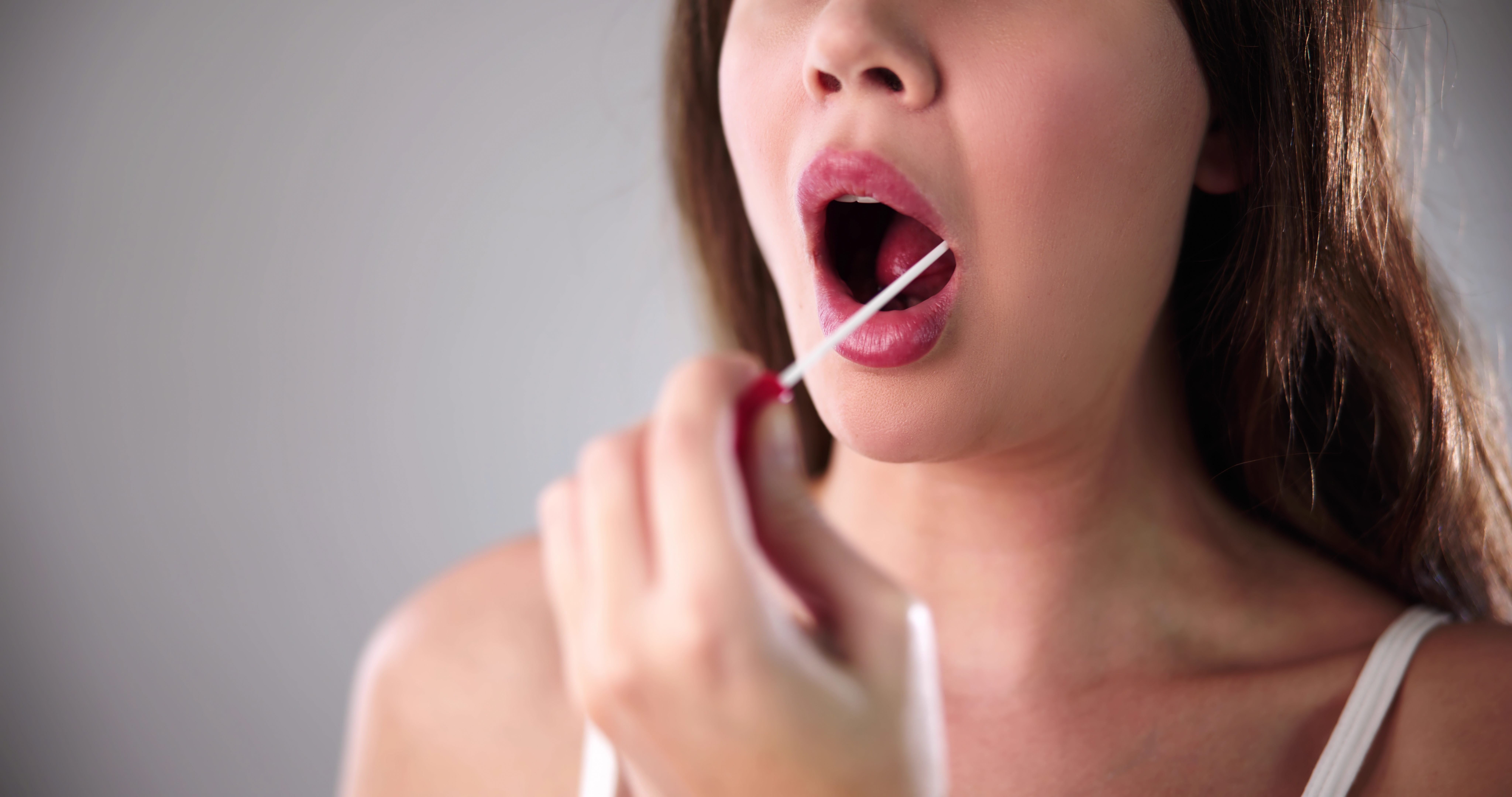
The OraQuick is an oral swab test available over the counter at most major pharmacies. You swab your upper and lower gums, place the swab in a tube with the included developing solution, and wait 20 to 40 minutes for a result. It detects only HIV antibodies, with a window period of up to 90 days. It was the first FDA-approved at-home HIV test and is the most widely available option. The FDA recently expanded approval to individuals as young as 14, making it accessible to more people who may face barriers to clinic-based testing.
INSTI HIV Self-Test
The INSTI kit uses a small finger prick instead of an oral swab. Blood-based tests like this usually detect HIV earlier and with greater accuracy because there are more antibodies in blood than in saliva. You’ll see your result in about 20 minutes, and the window period runs from 21 to 84 days. Like OraQuick, it’s FDA-approved and available over the counter.
Which is more accurate?
Oral swab tests like OraQuick catch about 92 percent of true positives in real-world studies, so about 1 in 12 cases might be missed. Blood-based tests like INSTI are about 99 percent sensitive. Both are very good at avoiding false positives. If you want the most accurate result and don’t mind a finger prick, the blood-based test is your best bet.
How the Window Period Affects Your Results
The window period is the time after possible HIV exposure when a test might not detect the infection yet. At-home HIV tests look for antibodies, your body’s response to the virus, not the virus itself. If you test too early, before your immune system has produced enough antibodies, you could get a false-negative result even if you are infected.
With OraQuick, wait up to 90 days after possible exposure for the most reliable result. For INSTI, the window is shorter, 21 to 84 days. Testing after the window period means you can trust your result. Testing before might not tell the whole story.
If you had a potential exposure within the last 72 hours, an at-home HIV test is not your first step. PEP is an emergency medication that can prevent HIV from taking hold, but it has to be started within 72 hours. Don’t wait to test. Find out if you need PEP and act quickly.
What to Do With Your Results
If your result is negative:
A negative result from an at-home HIV test means you’re HIV-negative if enough time has passed since your last possible exposure. If you’re still within the 90-day window, plan to test again once it has closed.
A negative result is also a good time to think about prevention. If you’re HIV-negative and at ongoing risk, PrEP reduces the risk of getting HIV from sex by about 99 percent when taken consistently. Learn more about PrEP at Health Stop STL.
If your result is reactive (positive):
A reactive at-home HIV test result needs to be confirmed with a lab-based test before it’s considered a diagnosis. False positives can occur, and clinical confirmation is the standard next step. Free STD testing in St. Louis, MO, at Health Stop STL includes lab-based HIV testing with no appointment required. Walk in or schedule your visit online.
A reactive result can bring up a lot of emotions. If that happens, you don’t have to figure out next steps alone. The Health Stop STL HIV care page has support and resources to help you understand what comes next.
When an In-Person HIV Test in St. Louis Is the Better Choice
An at-home HIV test works well for routine screening, but some situations call for a clinic visit.
Come in for an HIV test in St. Louis if:
- You had a potential exposure within the last 72 hours and need PEP
- You’re within the window period and want earlier detection than an antibody test can provide. Lab-based antigen/antibody tests detect HIV significantly earlier.
- You want a full STD panel alongside your HIV test. At-home options only cover HIV, while free STD testing in St. Louis at Health Stop STL also covers chlamydia, gonorrhea, syphilis, hepatitis, and more
- You got a reactive result on an at-home test and need confirmation
- You need documentation of your status to start PrEP
If you live outside the city, free STD testing in St. Louis County is also available through Health Stop STL. You can walk in at any time or make an appointment.
Health Stop STL offers STD testing in St. Louis, MO, with no appointment, no cost, and no judgment. You can get the full range of screenings in a single visit.
Where to Get a Free At-Home HIV Test Kit
You don’t have to pay for an at-home HIV test kit. Free kits are available at TakeMeHome.org. Order online, and they’ll arrive in discreet packaging in a few days. Most orders include two tests.
If you’d rather pick up a kit in person, OraQuick is sold over the counter at most major pharmacies. If cost is a concern, free STD testing in St. Louis at Health Stop STL covers more than just HIV and is always available at no cost.
Looking for free condoms in St. Louis? The Health Stop STL condom finder can help you locate the nearest pickup spot. You can also find info on where to get free condoms and other prevention tools on the Health Stop STL Know the Facts page.
Questions before you come in? Contact Health Stop STL, and we’re happy to help.